

LTO (Linear Tape-Open)
Open format for magnetic tape storage technique.
LTO (Linear Tape-Open)
LTO (Linear Tape-Open) is a magnetic tape backup technology that derives its name from its characteristic of being an open format. It was developed in the late 2000s by companies such as HP, IBM, and Seagate with the aim of providing a reliable and scalable data storage solution.
Starting from LTO-3, the LTO standard introduced an additional essential feature: data rewriting, known as WORM (Write-Once, Read-Many). This functionality allows users to permanently store data, preventing any subsequent modification or deletion of the information stored on the magnetic tape. WORM is particularly useful for industries that must comply with strict data retention regulations, such as legal compliance or long-term archival purposes.
With the advent of LTO-4, the LTO standard took another step forward by adding two major features: data encryption and encryption key management. This feature provides enhanced security when backing up sensitive data to magnetic tapes. The data is encrypted before being written to the tape, and only individuals with access to the appropriate decryption key can decrypt the stored information. This ensures data confidentiality, even in the event of theft or loss of the tape.
LTO-5 brought another significant advancement with the introduction of the Linear Tape File System (LTFS). This system allows the partitioning of the magnetic tape into different logical sections, similar to partitions on a hard drive. With LTFS, users can access the data stored on the magnetic tape in a more user-friendly manner, treating it as a regular file drive. This facilitates searching, extracting, and managing files on LTO tapes without the need for specific backup or recovery software.
LTO (Linear Tape-Open) technology offers an open magnetic tape backup solution developed by major industry players. The various versions of the LTO standard, starting from LTO-3, have introduced features such as WORM, data encryption and key management, as well as the LTFS file system. These features enhance the reliability, security, and usability of LTO tape backups, providing users with a flexible and scalable data storage solution to meet their specific needs.
Different LTO formats
The LTO (Linear Tape-Open) format has undergone significant evolution over the years, with more than nine different formats released since 2000. Each new version of the LTO format brings improvements and advanced features, offering users higher storage capacity, faster data transfer rates, and improved reliability.
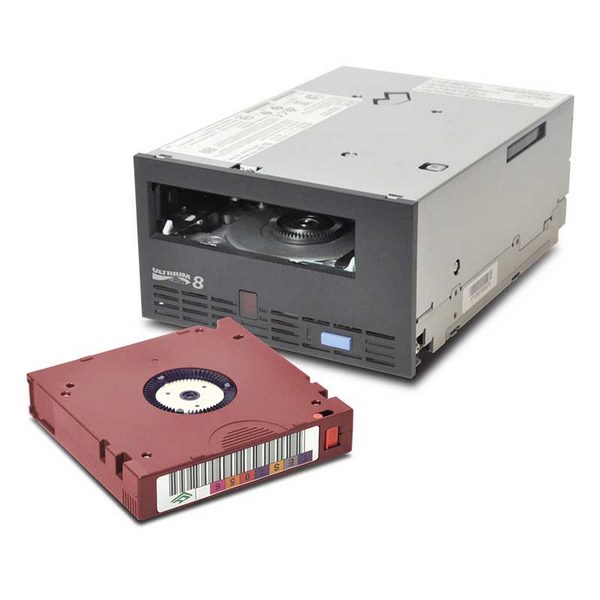
Reading the content of LTO tapes requires an appropriate reader that matches the format of the tape in question. LTO tape drives are generally backward compatible, which means they can read and write on tapes of previous formats.
Upward compatibility of LTO drives is usually guaranteed across multiple generations, which means that an LTO-8 drive, for example, can read LTO-7 tapes. Downward compatibility is limited, however, meaning that an LTO-8 drive cannot read tapes in earlier formats such as LTO-6 or LTO-5.
To ensure optimal reading and usage of LTO tapes, it is therefore essential to select the appropriate reader that matches the format of the tape you want to read or write.
LTO tape generations
Common failures of LTO tapes
The most common situations we handle in the laboratory.
Magnetic tape degradation
Magnetic oxide deteriorates over time, causing increasing read errors. LTO tapes stored in poor climatic conditions are particularly vulnerable.
LTO streamer failure
Dirty, worn or misaligned read heads. A faulty drive can also damage the tape during a reading attempt with an incompatible or poorly calibrated streamer.
Tape jam or breakage
The tape jams, wrinkles or breaks inside the drive. An abrupt stop or forced ejection are the most common causes of this type of mechanical damage.
Catalogue error or corrupt LTFS
The LTFS file system or the backup software catalogue is damaged. The data is physically on the tape but the software can no longer index or restore it.
Accidental overwrite or erasure
A tape reused by mistake, a misconfigured backup job or accidental deletion. Recovery is possible as long as the data has not been completely overwritten.
Climatic or magnetic damage
Exposure to heat, humidity, magnetic fields or dust. LTO tapes are sensitive to storage conditions and gradual degradation can render data unreadable.
Frequently asked questions
Our specialists answer the most common questions.
How long does LTO tape data recovery take?
The diagnosis is delivered in less than 3 hours. The recovery time depends on the tape's capacity and the nature of the failure, but most cases are resolved in 24 to 72 hours.
My LTO tape is no longer readable, is it recoverable?
In most cases, yes. The most frequent causes are oxide degradation, a defective streamer, or a software compatibility issue. Our team has mastered all of these scenarios.
Which LTO tape generations do you recover?
We recover all generations of LTO tapes, from LTO-1 (100 GB native) to LTO-9 (18 TB native). Our laboratory has the compatible readers for each generation.
The diagnosis is delivered in less than 3 hours. The recovery time depends on the tape's capacity and the nature of the failure, but most cases are resolved in 24 to 72 hours.
In most cases, yes. The most frequent causes are oxide degradation, a defective streamer, or a software compatibility issue. Our team has mastered all of these scenarios.
We recover all generations of LTO tapes, from LTO-1 (100 GB native) to LTO-9 (18 TB native). Our laboratory has the compatible readers for each generation.